



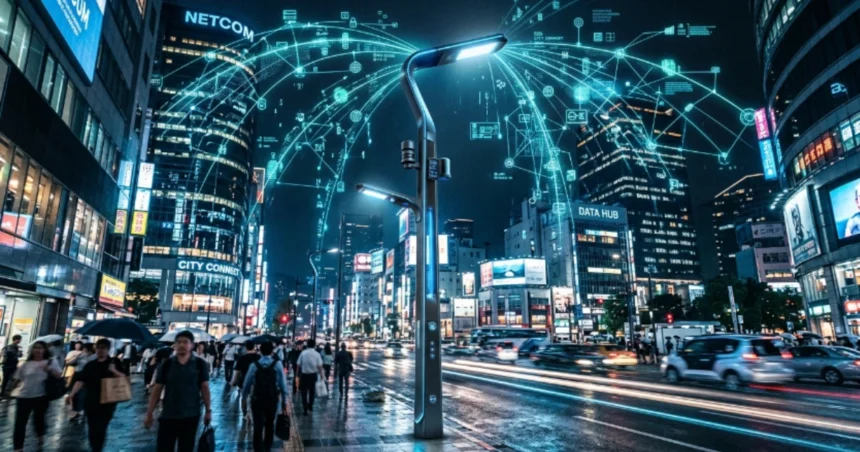
Sensity Systems is one of the most influential names in the history of smart city technology, best remembered for pioneering the idea that ordinary streetlights could become intelligent, data-gathering devices. Founded in 2010 and headquartered in Sunnyvale, California, Sensity Systems built its reputation on a bold vision: using the global shift to LED lighting as the backbone for a citywide sensor network. Before its eventual acquisition by Verizon in 2016, Sensity Systems had become a recognized leader in the Internet of Things (IoT) space, working with Fortune 500 companies, universities, hospitals, and municipal governments. This article explores the founding, growth, technology, partnerships, and legacy of Sensity Systems in complete detail.
The Origins of Sensity Systems
Sensity Systems began life under a different name — Xeralux Inc. — before rebranding as Sensity Systems to better reflect its expanded mission beyond simple LED lighting conversion. The company was founded by Rusty Cumpston, an entrepreneur who recognized that the massive global transition toward energy-efficient LED lighting represented more than an environmental opportunity. He saw it as an infrastructure opportunity. Streetlights, unlike almost any other urban fixture, are already wired for power, spaced evenly throughout cities, and elevated above street level. Sensity Systems was built on the insight that this existing infrastructure could double as the physical backbone for a new generation of smart city networks.
Headquarters and Early Base of Operations
From its earliest days, Sensity Systems operated out of Sunnyvale, California, placing it firmly within the heart of Silicon Valley’s innovation ecosystem. This location gave the company close proximity to major technology partners, venture capital firms, and engineering talent. Being based in Sunnyvale also allowed Sensity Systems to quickly forge relationships with nearby companies working on semiconductors, networking hardware, and cloud computing. The Silicon Valley address became more than a formality; it directly shaped the company’s culture of rapid iteration and its ability to attract strategic investors who understood the long-term value of combining lighting infrastructure with IoT technology.
What Sensity Systems Actually Built
At the core of Sensity Systems‘ business was a concept the company called the Light Sensory Network, or LSN. This was a high-speed, sensor-based, multiservice, open networking platform that transformed LED luminaires into intelligent nodes. Each streetlight equipped with Sensity’s technology could host embedded sensors, processors, and wireless communication modules. Rather than simply illuminating a street, the light fixture became a data-collection point capable of monitoring its surroundings continuously. This turnkey approach meant that Sensity Systems provided both the hardware knowledge and the software integration required to make the Light Sensory Network commercially viable for cities and private property owners alike.
Introducing NetSense: The Flagship Platform
The centerpiece of Sensity Systems’ technology stack was a platform called NetSense, described as the first commercially available implementation of the Light Sensory Network. NetSense integrated LED lighting, embedded sensors, high-speed networking, cloud computing, and big data analytics into a single multiservice platform with distributed intelligence. Each luminaire equipped with NetSense contained a fully functioning processor capable of running software instructions, meaning the network of lights could collectively gather and interpret environmental data in real time. This distributed computing architecture was considered groundbreaking because it moved analytics closer to the source of the data rather than relying solely on centralized servers.
Turning Streetlights Into Public Safety Tools
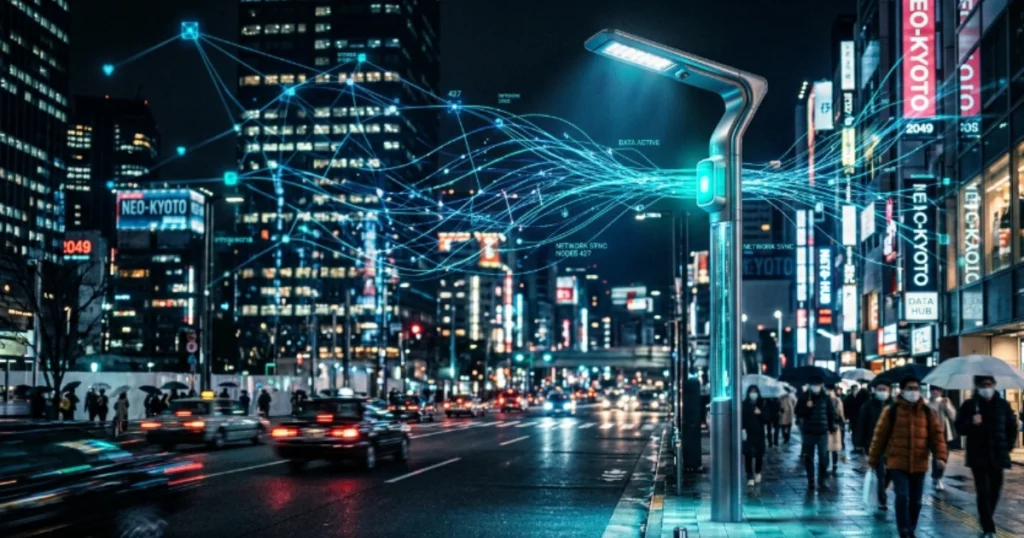
One of the most compelling applications developed by Sensity Systems was in the area of public safety. By embedding video analytics and other sensing technologies into streetlights, cities could gain a passive but powerful surveillance and monitoring layer without installing entirely new infrastructure. Sensity Systems positioned this capability as a way to help municipal agencies respond faster to incidents, monitor high-traffic areas, and support law enforcement efforts with real-time data. This use case became one of the most frequently cited reasons that municipal governments and university campuses partnered with Sensity Systems during its growth years.
Smart Parking and Traffic Management Solutions
Beyond public safety, Sensity Systems developed smart parking and traffic management applications that ran on its NetSense platform. Sensors embedded in streetlights could detect open parking spaces and relay that information to drivers through connected apps, reducing congestion caused by vehicles circling in search of parking. Traffic management sensors also allowed municipalities to monitor vehicle flow and adjust signals or signage dynamically. These applications appealed strongly to Sensity Systems’ municipal clients, since parking and traffic congestion represent persistent challenges for city planners, and the ability to solve them using existing lighting poles reduced both cost and construction disruption.
Environmental Monitoring Capabilities
Sensity Systems also built environmental monitoring into its Light Sensory Network, allowing cities to track conditions such as air quality, humidity, seismic activity, wind, temperature, and even snowfall. This gave municipal and university customers a low-cost way to gather granular environmental data across large geographic areas. Because sensors were distributed across an entire lighting grid rather than concentrated in a handful of weather stations, Sensity Systems’ environmental monitoring offered far greater resolution than traditional monitoring systems. This made the platform particularly attractive to campuses, transportation authorities, and horticultural operations that depend on precise, localized environmental data for planning and operations.
Energy Efficiency: The Foundation of the Business Model
Even as Sensity Systems expanded into public safety, traffic, and environmental applications, energy efficiency remained the foundation of its value proposition. According to the company, LED lighting alone delivered approximately 80 percent energy savings compared to traditional fluorescent or high-intensity discharge (HID) lighting, while combining LED lighting with Sensity’s networking technology pushed savings closer to 90 percent. This dual benefit — dramatic energy cost reduction paired with new revenue-generating smart city services — gave Sensity Systems a strong return-on-investment argument that resonated with budget-conscious municipal and commercial customers.
Key Strategic Partnerships
Throughout its history, Sensity Systems built partnerships with some of the largest technology and lighting companies in the world. Cisco Systems partnered with Sensity to use its network as a foundation for Cisco’s City Infrastructure Management software. Sensity Systems also worked closely with Qualcomm and Panasonic, expanding the reach of its Light Sensory Network into a broader ecosystem of smart city technologies. These partnerships allowed Sensity Systems to embed its platform within larger, more comprehensive smart city solutions offered by established technology giants, significantly increasing the credibility and market reach of its core NetSense platform.
The Acquisition of Eutecus
A pivotal moment in Sensity Systems’ growth came when the company acquired Eutecus Inc., a Berkeley, California-based firm specializing in computer vision technology. Sensity Systems had partnered with Eutecus for roughly three years before taking full ownership, using its vision technology within various smart city deployments. Following the acquisition, Eutecus CEO Csaba Rekeczky joined Sensity Systems as vice president of advanced analytics and vision systems. Company chairman and CEO Hugh Martin described video as the most powerful sensor for delivering actionable, real-time information to smart city applications, underscoring why this acquisition mattered so much to Sensity Systems’ long-term strategy.
Funding History and Investor Backing
Sensity Systems raised a total of approximately $74 million across multiple funding rounds from a group of respected investors. Backers included Acuity Brands, Cisco Investments, GE Ventures, Almaz Capital, Mohr Davidow Ventures, Simon Venture Group, and Trinity Capital Investment, among others. Notably, Simon Property Group, one of the largest commercial real estate and shopping mall owners in the world, was also connected to Sensity Systems through GE’s Current lighting and energy division. This diverse investor base reflected confidence not just in Sensity Systems’ technology, but in the broader thesis that smart lighting infrastructure represented a major growth opportunity across commercial, municipal, and industrial markets.
Leadership Under Hugh Martin
Hugh Martin served as chairman and CEO of Sensity Systems during much of its most significant growth period, including its acquisitions and eventual sale to Verizon. Martin was a vocal advocate for the Light Sensory Network concept, frequently emphasizing that Sensity Systems was the first company to successfully combine all the necessary technology expertise, integration know-how, and strategic partnerships needed to make the LSN concept commercially real. Under his leadership, Sensity Systems expanded its global footprint and deepened its relationships with major technology partners, positioning the company as an attractive acquisition target for larger telecommunications and IoT players.
Global Smart City Deployments
By the time of its acquisition, Sensity Systems had successfully deployed its Light Sensory Network platform in 42 smart city installations across the globe. Customers included Fortune 500 businesses, commercial and industrial property owners, retail facilities, municipal and regional government agencies, universities, school districts, hospitals, transportation authorities, warehousing operations, and even horticultural facilities. This diverse customer base demonstrated that Sensity Systems’ technology was not limited to any single industry vertical, but instead offered flexible applications wherever lighting infrastructure and data collection intersected with operational efficiency goals.
The Verizon Acquisition of Sensity Systems
In September 2016, technology and telecommunications giant Verizon announced its acquisition of Sensity Systems, with the deal expected to close in the fourth quarter of that year. Terms of the acquisition were not publicly disclosed. Verizon’s goal was to integrate Sensity Systems’ Light Sensory Network platform into its own ThingSpace IoT business, a developer-focused platform launched in 2015. Following the acquisition, Sensity Systems began operating alongside Verizon’s Smart Communities organization, which already offered connected intelligent solutions covering parking, lighting, traffic management, and security for cities and enterprise customers.
Why Verizon Wanted Sensity Systems
Verizon’s interest in Sensity Systems made strategic sense on multiple levels. Mike Lanman, Verizon’s senior vice president for enterprise products and IoT at the time, described Sensity Systems as a leading provider of IoT solutions for smart communities with a strong ecosystem of partners. The acquisition allowed Verizon to accelerate deployment of large-scale smart city implementations across cities, universities, and venues. For a telecommunications company already investing heavily in IoT infrastructure, acquiring Sensity Systems provided immediate access to proven hardware, software, and a base of enterprise and municipal customers, rather than requiring Verizon to build comparable smart lighting technology from scratch.
Rebranding as Verizon Smart Communities
Following its acquisition, Sensity Systems transitioned into a new corporate identity, eventually operating as Verizon Smart Communities LLC. This transition marked the formal conclusion of Sensity Systems as an independent company, though its core technology, patents, and engineering talent continued to shape Verizon’s smart city offerings for years afterward. The Light Sensory Network concept pioneered by Sensity Systems remained influential within Verizon’s broader IoT strategy, illustrating how a relatively small Silicon Valley startup could leave a lasting technological legacy even after being absorbed into a much larger corporate structure.
The Broader Legacy of Sensity Systems
The story of Sensity Systems remains a frequently cited case study in smart city innovation circles. Sensity Systems demonstrated that existing municipal infrastructure, when reimagined creatively, could support entirely new categories of digital services without requiring cities to build new physical networks from the ground up. This lesson influenced how other IoT companies approached smart city projects long after Sensity Systems itself ceased to operate independently. The company’s emphasis on combining energy savings with data services also helped establish a business model template that many smart infrastructure companies continue to follow today.
Lessons From the Sensity Systems Growth Story
For entrepreneurs and technologists studying the history of IoT, Sensity Systems offers several important lessons. First, identifying an existing, underutilized infrastructure asset — in this case, streetlights — can be more valuable than building new infrastructure from scratch. Second, strategic partnerships with established players like Cisco and Qualcomm can dramatically accelerate market credibility for a smaller company. Third, targeted acquisitions, such as the purchase of Eutecus, can quickly add specialized capabilities that would otherwise take years to develop internally. These strategic choices collectively explain why Sensity Systems became attractive enough to be acquired by a company as large as Verizon.
Conclusion
Sensity Systems stands as one of the defining companies in the early history of smart city technology. From its founding in 2010 as Xeralux Inc. to its rebranding, rapid growth, strategic acquisitions, and eventual sale to Verizon in 2016, Sensity Systems consistently pushed the boundaries of what streetlights and LED infrastructure could accomplish. Through its NetSense platform and the broader Light Sensory Network concept, Sensity Systems proved that energy efficiency and smart city data services could be delivered through a single, unified infrastructure layer. Even though Sensity Systems no longer exists as an independent company, its technological contributions continue to influence how modern cities approach smart lighting, public safety, and IoT infrastructure.
Frequently Asked Questions (FAQs)
1. What was Sensity Systems known for? Sensity Systems was known for pioneering the Light Sensory Network, a platform that turned LED streetlights into sensor-equipped IoT devices for smart cities.
2. When was Sensity Systems founded? Sensity Systems was founded in 2010, originally operating under the name Xeralux Inc. before rebranding.
3. Who founded Sensity Systems? Sensity Systems was founded by Rusty Cumpston, who envisioned using LED lighting conversion as the foundation for a smart city sensor network.
4. Who acquired Sensity Systems? Verizon acquired Sensity Systems in 2016, integrating its technology into Verizon’s ThingSpace IoT business and Smart Communities division.
5. What was NetSense? NetSense was Sensity Systems’ flagship platform, combining LED lighting, embedded sensors, networking, and cloud analytics into one multiservice system.
6. How much funding did Sensity Systems raise? Sensity Systems raised approximately $74 million across multiple funding rounds from investors including Cisco Investments, GE Ventures, and Acuity Brands.
7. Where was Sensity Systems headquartered? Sensity Systems was headquartered in Sunnyvale, California, placing it at the center of the Silicon Valley technology ecosystem.