


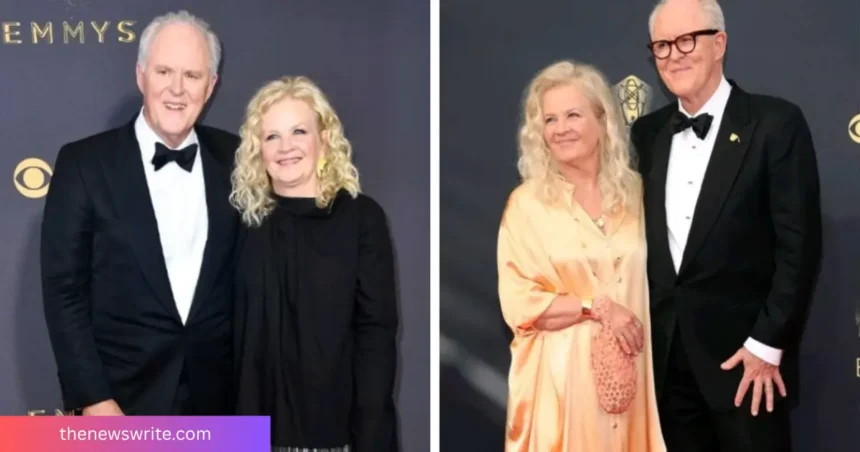
Jean Taynton is a name that surfaces again and again in biographical searches about award-winning actor John Lithgow, yet she has spent decades deliberately outside the public eye. Long before Lithgow became a household name through films and television, Jean Taynton was building her own quiet, purposeful life as an educator, performer, and mother. This article explores everything publicly known and reliably documented about Jean Taynton — her early years, her education, her theatrical beginnings, her marriage, and the legacy she built through her devotion to teaching. While information about her remains limited because she has chosen privacy over publicity, piecing together her story offers a meaningful look at the woman who stood beside a future star during his most formative years.
Who Is Jean Taynton?
Jean Taynton is best known publicly as the first wife of actor John Lithgow, but reducing her story to that single label overlooks the far richer picture of who she actually is. She built an independent career as a teacher, specializing in literacy and reading instruction, long before her connection to Lithgow brought her occasional public attention. Unlike many people associated with celebrities, Jean Taynton never sought the spotlight herself. She consistently avoided interviews, media appearances, and public commentary about her past marriage. This consistent choice to remain private is itself part of her story — a deliberate decision to let her professional achievements, rather than her marital history, define her.
Early Life and Family Background
Detailed public records about Jean Taynton’s childhood are scarce, which is consistent with her lifelong preference for privacy. What is known is that she was raised in the United States and developed an early interest in both academics and the arts. From a young age, she reportedly showed curiosity about literature, storytelling, and performance — interests that would later shape both her teaching career and her brief foray into community theater. Her upbringing appears to have emphasized intellectual growth and creative expression, values that carried through into her adult life. Because Jean Taynton has never publicly discussed her family background in detail, much of this remains reconstructed from secondary biographical accounts rather than her own words.
Education at Oberlin College
According to multiple biographical sources, Jean Taynton attended Oberlin College in Ohio, a liberal arts institution well known for its progressive academic tradition and strong arts programs. It was during her time at Oberlin that her passion for literature, education, and performance began to take clearer shape. The college’s environment, which encouraged independent thinking and creative exploration, appears to have suited her interests well. Her academic path there laid the foundation for the teaching career she would pursue for decades afterward. While Oberlin is frequently mentioned in connection with Jean Taynton’s biography, specifics about her coursework, graduation year, and campus involvement remain undocumented in verified public records.
A Passion for Literature and the Arts
Alongside her academic studies, Jean Taynton cultivated a genuine love for literature and dramatic performance. This dual interest — intellectual rigor paired with creative expression — became a defining thread throughout her life. It explains why she pursued teaching as a profession while also participating in community theater during her college summers. For many people, these two passions might seem unrelated, but for Jean Taynton, they complemented each other. Teaching required storytelling, patience, and imagination, while theater demanded discipline and expressive communication. Together, they shaped a well-rounded individual whose professional and personal identity extended far beyond any single label.
Jean Taynton’s Theatrical Beginnings at Highfield Theater
During her college summers, Jean Taynton performed at the Highfield Theater in Falmouth, Massachusetts, a well-regarded community playhouse. Friends and colleagues from that era have described her as witty, talented in comedic roles, and possessing a vibrant stage presence that contrasted with her more disciplined academic pursuits. This period of her life reveals a side of Jean Taynton that many people are unaware of — a spirited performer who enjoyed the energy of live theater. It was this theatrical involvement, rather than her academic career, that would unexpectedly lead her toward the relationship that would define much of her public recognition in later years.
Meeting John Lithgow in “Patience”
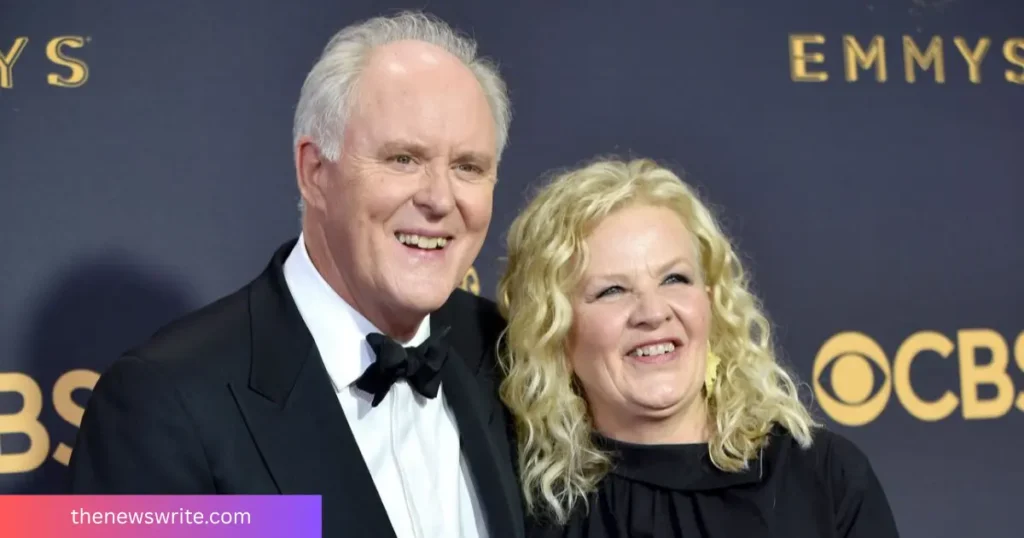
It was at Highfield Theater in the mid-1960s that Jean Taynton first met a young John Lithgow, then an aspiring actor. The two were cast opposite each other in Gilbert and Sullivan’s comic opera Patience, with Jean Taynton playing Lady Jane and Lithgow playing Bunthorne, her comedic love interest on stage. Their on-stage chemistry reportedly translated into a genuine connection off stage. Despite Jean being several years older than Lithgow, the two grew close during rehearsals and performances. This chance theatrical casting became the starting point of a relationship that would carry both of them into a new chapter of their lives.
Jean Taynton and John Lithgow’s Whirlwind Romance
The relationship between Jean Taynton and John Lithgow developed relatively quickly following their meeting at Highfield Theater. At the time, Lithgow was still a teenager on the cusp of pursuing serious dramatic training, while Taynton was several years his senior and already an established, education-focused young woman. Despite the age gap and their different life stages, the two shared a strong intellectual and creative bond. Their courtship unfolded against the backdrop of community theater life, filled with rehearsals, performances, and shared artistic ambition. This period represents one of the few well-documented chapters of Jean Taynton’s personal life, largely because it intersects directly with Lithgow’s own biography.
Marriage: September 10, 1966
Jean Taynton and John Lithgow married on September 10, 1966, in an intimate ceremony held at an Episcopal church in Philadelphia. Reports indicate that roughly fifty guests attended, reflecting the couple’s preference for a modest and private celebration rather than an elaborate wedding. At the time of the marriage, Lithgow was only nineteen years old, still years away from the fame he would later achieve through stage, film, and television. Jean Taynton, slightly older and already grounded in her educational career, entered the marriage as the more established of the two. This dynamic — Jean as the steady provider while Lithgow pursued his craft — would shape much of their early married life together.
A Modest Ceremony in Philadelphia
The choice of a small, understated wedding ceremony reflects a pattern that would define Jean Taynton’s approach to her personal life throughout the following decades: privacy over spectacle. Rather than a large, attention-drawing event, the couple opted for something intimate and personal, surrounded by close family and friends. This modesty stands in contrast to the public attention Lithgow would later attract as his acting career grew. For Jean Taynton, the wedding was simply the beginning of a partnership built on mutual support during uncertain financial and professional years, not a moment designed for public display or lasting media documentation.
Life in London: Supporting a Rising Actor
Shortly after their wedding, Jean Taynton and John Lithgow relocated to London, where Lithgow enrolled at the London Academy of Music and Dramatic Art (LAMDA) to further his acting training. While Lithgow immersed himself in dramatic education, Jean Taynton secured teaching positions at local schools, continuing her professional career even while living abroad. This period demonstrates the practical, supportive role Taynton played during the early years of their marriage. Her steady income and professional stability allowed Lithgow the freedom to focus on his craft without the immediate pressure of financial survival. It was a partnership defined by shared sacrifice, with Jean Taynton’s career effectively underwriting her husband’s artistic development.
Jean Taynton’s Teaching Career
Teaching was not a secondary pursuit for Jean Taynton — it was a genuine calling that she maintained throughout her adult life, independent of her marriage. She worked as an educator across multiple decades, adapting to different school systems both in the United States and abroad during her time in London. Her dedication to the classroom required patience, creativity, and a willingness to continually refine her teaching methods. Colleagues who worked alongside her have described her as thoughtful and deeply committed to her students’ progress. Unlike her connection to Lithgow, which brought unsought public attention, Jean Taynton’s teaching career represents an area of her life she built entirely on her own terms.
Specializing in Literacy and Dyslexia Education
A significant part of Jean Taynton’s professional legacy lies in her specialization in literacy instruction, including work with children who struggled with reading and comprehension, particularly those with dyslexia. During the 1960s and 1970s, dyslexia was far less understood than it is today, meaning educators in this field had to develop creative, individualized approaches with limited institutional support. Jean Taynton’s commitment to this specialized area of teaching required extensive one-on-one attention, patience, and continuous learning about emerging instructional methods. Her work in this field, though never publicly celebrated at the time, reflects a meaningful contribution to early literacy education for children who needed extra support.
Returning to the United States
After their time in London, Jean Taynton and John Lithgow eventually returned to the United States as Lithgow’s acting career began to take shape through stage productions and early roles. Upon returning, Jean Taynton continued her teaching career, once again prioritizing consistency and professional dedication even as her husband’s public profile started to grow. This return marked a transitional period for the couple, balancing Lithgow’s increasing career demands with the practical realities of building a stable home life. Throughout this stage, Jean Taynton remained the steady presence in the household, continuing the pattern of professional dedication that had defined her identity since college.
Motherhood: Raising Ian Lithgow
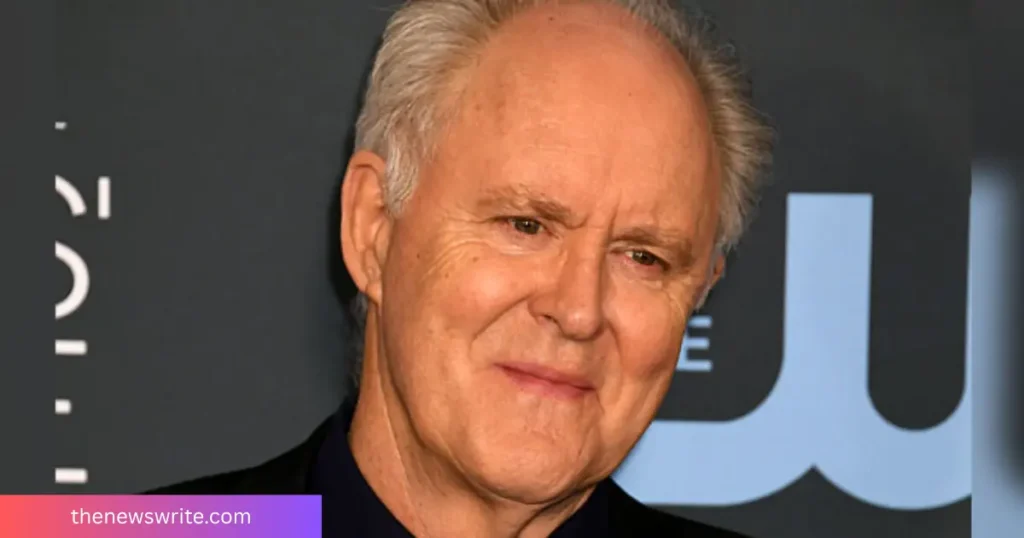
Jean Taynton and John Lithgow became parents to a son, Ian Lithgow, who later pursued his own career as an actor and drama therapist. Raising a child while managing a demanding teaching career and supporting a husband navigating the early, unstable years of an acting profession required significant balance and resilience from Jean Taynton. Motherhood added another dimension to her already full life, one that she reportedly approached with the same dedication she brought to her classroom. Though public information about her parenting approach is limited, her son’s own path into performance and therapeutic work suggests an upbringing that valued both creativity and emotional grounding.
Balancing Family, Career, and Marriage
Maintaining a demanding teaching career, raising a young son, and supporting a husband whose career was rapidly gaining momentum placed considerable demands on Jean Taynton. This balancing act — common to many women of her generation — required constant adjustment as priorities shifted. While Lithgow’s acting opportunities grew, requiring travel, rehearsals, and long working hours, Jean Taynton remained the anchor of domestic stability. Sources describe this period as one defined by resilience rather than resentment, with Jean Taynton continuing to pursue her own professional goals rather than subordinating her identity entirely to her husband’s rising fame.
The End of the Marriage: Divorce and New Beginnings
As John Lithgow’s acting career accelerated through the 1970s, the marriage between him and Jean Taynton eventually came to an end in divorce. Public records offer limited detail about the specific circumstances or exact timeline of the separation, consistent with both individuals’ general discretion about the matter. What is clear is that the marriage, which began in a modest Philadelphia ceremony in 1966, concluded after Lithgow had already begun establishing himself professionally. Following the divorce, Jean Taynton largely receded from any public narrative connected to her former husband, choosing instead to continue building her own independent life away from the entertainment industry.
Life After John Lithgow
Following her divorce, Jean Taynton appears to have continued prioritizing her teaching career and personal privacy, largely disappearing from public records related to the entertainment world. Unlike many former spouses of celebrities who occasionally resurface in interviews or memoirs, Jean Taynton has maintained an almost complete media silence about her past marriage and subsequent life. This consistency suggests a deliberate, long-term choice rather than a temporary retreat from attention. Whatever personal or professional path she pursued after the divorce, she appears to have done so entirely outside of public documentation, reinforcing the private nature that has characterized her entire adult life.
Jean Taynton’s Legacy as an Educator
While much of the public interest in Jean Taynton centers on her marriage to a famous actor, her genuine legacy lies in the classroom. Decades spent teaching, particularly her specialized work supporting students with reading difficulties and dyslexia, represents meaningful, lasting impact on the individual students she taught. Education, unlike fame, rarely comes with public recognition, yet its effects ripple forward through the lives of those who benefited from her guidance. Jean Taynton’s story is a reminder that meaningful contribution doesn’t require public acclaim. Her professional dedication stands as a legacy entirely separate from — and arguably more substantial than — her brief public association with celebrity.
Why Jean Taynton’s Story Still Resonates Today
Jean Taynton’s continued relevance in biographical searches speaks to a broader public curiosity about the private lives that exist alongside public fame. People are drawn to her story not because of scandal or drama, but because it represents something relatable: an ordinary, purposeful life quietly unfolding beside an extraordinary one. Her commitment to teaching, her theatrical beginnings, and her steady support during Lithgow’s early career offer a grounded counterpoint to the glamour typically associated with celebrity biographies. In an era saturated with curated public personas, Jean Taynton’s consistent choice of privacy feels increasingly rare — and that rarity is part of why her story continues to attract interest.
Conclusion
Jean Taynton’s story offers a quiet but meaningful counterpoint to the more widely documented career of her former husband, John Lithgow. From her academic years at Oberlin College to her theatrical beginnings at Highfield Theater, and from her steady support during Lithgow’s early acting training in London to her long-standing dedication to teaching, Jean Taynton built a life defined by purpose rather than publicity. While gaps remain in the public record — a natural result of her consistent choice to stay private — what is known paints the picture of a resilient, capable woman whose contributions to education outlasted her brief, well-documented marriage. Her story remains a reminder that meaningful lives are often built quietly, far from the spotlight.
Jean Taynton FAQs
1. Who is Jean Taynton? Jean Taynton is an American former teacher best known as the first wife of actor John Lithgow. She built an independent career in education, specializing in literacy instruction, separate from her brief public association with the entertainment industry.
2. When did Jean Taynton marry John Lithgow? According to biographical accounts, Jean Taynton and John Lithgow married on September 10, 1966, in a modest ceremony in Philadelphia.
3. Do Jean Taynton and John Lithgow have children? Yes, the couple had a son together, Ian Lithgow, who went on to work as an actor and drama therapist.
4. What did Jean Taynton do for a living? Jean Taynton worked as an educator for decades, with a particular focus on literacy instruction and supporting students with reading difficulties, including dyslexia.
5. Where did Jean Taynton and John Lithgow meet? They met at Highfield Theater in Falmouth, Massachusetts, while performing together in a community theater production of Gilbert and Sullivan’s Patience.
6. Is Jean Taynton still alive today? There is no verified, publicly available information confirming her current status, as she has maintained a private life away from media coverage for decades.
7. Why is Jean Taynton mostly unknown to the public? Jean Taynton has consistently chosen privacy over public attention throughout her life, avoiding interviews and media appearances despite her connection to a well-known public figure.