



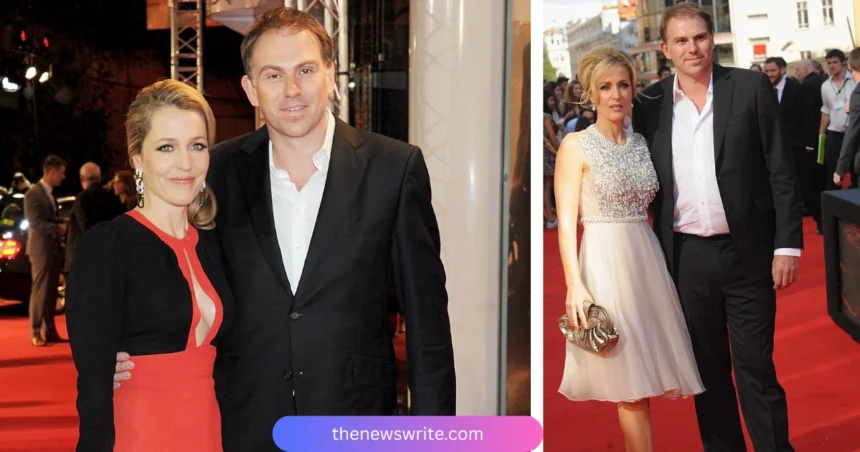
Julian Ozanne is a name that many people recognize because of his brief marriage to X-Files star Gillian Anderson, but his own story stretches far beyond that headline. Long before he became a footnote in celebrity news, Julian Ozanne had already built a serious career as a Financial Times foreign correspondent, reporting from war zones and capital cities across Africa and the Middle East. He later reinvented himself as a documentary filmmaker, and eventually moved into African forestry investment and international business advisory work. This article explores the full life and career of Julian Ozanne — from his Kenyan childhood to his years in journalism, his transition into film, and his quieter, more private chapters today.
Who Is Julian Ozanne?
At his core, Julian Ozanne is a British journalist, documentary filmmaker, producer, and businessman whose professional life has been shaped almost entirely by Africa. He is not a celebrity in the traditional sense — he has never sought the spotlight, rarely gives interviews, and keeps no public social media presence. Instead, his reputation was earned through decades of on-the-ground reporting, documentary production, and business ventures tied to sustainable development. Many articles about Julian Ozanne focus narrowly on his marriage to Gillian Anderson, but that chapter represents only a small part of a much longer and more substantial career in media, finance, and international affairs.
Early Life and Kenyan Roots
Julian Ozanne was born in Kenya in the mid-1960s, into a family with deep ties to East and Southern Africa. Much of his early childhood was spent in the region, an experience that gave him firsthand exposure to African politics, culture, and daily life well before he ever picked up a notebook as a journalist. This upbringing is frequently cited as the foundation for his later career, since it gave him a level of cultural fluency that few Western correspondents possessed when reporting on the continent. Growing up between British and African influences shaped both his worldview and his professional instincts, later evident in the empathetic, on-the-ground style of reporting that defined his journalism career.
Education at the London School of Economics
After his childhood in Africa, Julian Ozanne moved to the United Kingdom to pursue higher education at the prestigious London School of Economics (LSE), where he studied economics and international affairs. This academic grounding proved essential later in his career, giving him the analytical tools to understand financial systems, political risk, and development economics — subjects that would become recurring themes in his journalism and later business work. The LSE experience also connected him with a network of policy-minded peers, some of whom would later intersect with his career in Washington, D.C., and international finance. His time at LSE is consistently cited as the intellectual starting point of his professional life.
Starting a Career in Washington, D.C.
Before entering journalism full-time, Julian Ozanne spent time working for a Democratic congressman in Washington, D.C. This early stint in American politics gave him a practical understanding of policymaking and public affairs, skills that would later inform his reporting on governance, development, and political conflict in Africa and the Middle East. It was a relatively brief chapter, but one that broadened his perspective beyond either Britain or Africa, giving him a genuinely international outlook. This blend of political insight and academic training positioned him well for the demanding, fast-paced world of foreign correspondence he would soon enter.
Joining the Financial Times
The defining chapter of Julian Ozanne’s early career began when he joined the Financial Times (FT), one of the world’s most respected business and international newspapers. Over roughly a decade, he built a reputation as a rigorous, courageous foreign correspondent willing to travel into difficult and often dangerous environments to get the story right. His FT years placed him firmly within a professional culture defined by accuracy, discretion, and editorial integrity. It was during this period that Julian Ozanne transformed from a promising young reporter into one of the paper’s most trusted voices on African and Middle Eastern affairs, eventually reporting from more than 50 countries.
Serving as Middle East Correspondent
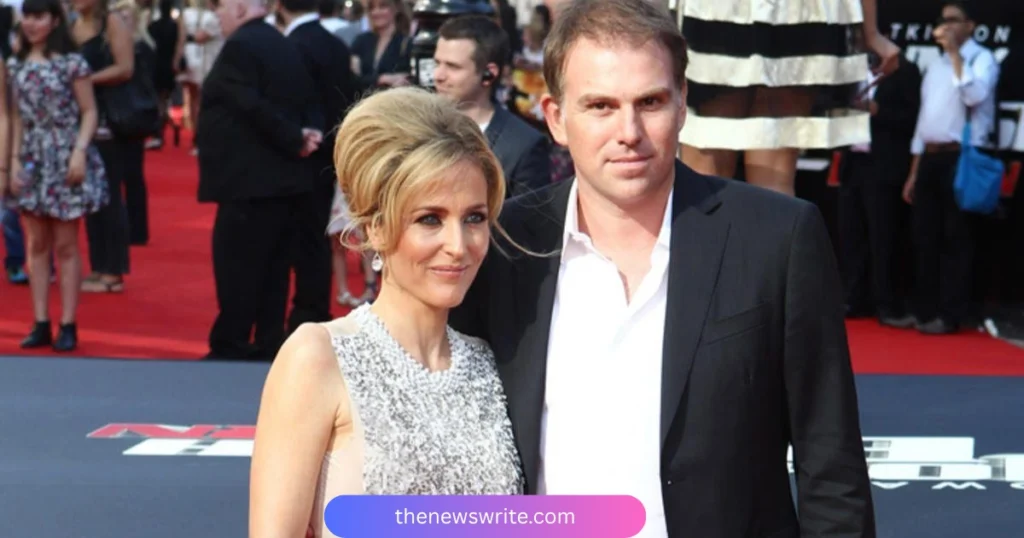
During his time at the Financial Times, Julian Ozanne served as the paper’s Middle East correspondent, covering political developments, conflict, and economic shifts across a historically volatile region. This role required constant travel, careful sourcing, and the ability to make sense of rapidly changing political situations for an international business readership. His reporting from the Middle East added a geopolitical dimension to his journalism career, complementing the African coverage that would ultimately define his legacy. Colleagues from this era have noted his ability to combine hard economic analysis with human-centered storytelling — a skill that distinguished him from correspondents focused purely on financial data.
Rising to Africa Bureau Chief
Julian Ozanne’s most significant journalistic role came when he was appointed Africa Bureau Chief for the Financial Times. In this position, he oversaw and contributed reporting on political transitions, economic reform, humanitarian crises, and conflict across the African continent. The role placed him at the center of major stories throughout the 1990s, a decade marked by significant upheaval in several African nations. His work as bureau chief cemented his standing as one of the most knowledgeable Western journalists covering Africa at the time, and it gave him relationships and insights that would later prove valuable in his business ventures on the continent.
Reporting From More Than 50 Countries
One of the most remarkable facts about Julian Ozanne‘s journalism career is the sheer geographic scope of his work. Over the course of his tenure at the Financial Times, he reported from more than 50 countries, primarily across Africa and the Middle East. Few Western correspondents of his generation could claim such extensive, boots-on-the-ground experience across so many nations and conflict zones. This breadth of exposure gave him a nuanced understanding of regional dynamics that went well beyond the surface-level coverage typical of parachute journalism, and it remains one of the most cited credentials in any serious account of his professional background.
Transition Into Documentary Filmmaking
By the late 1990s, Julian Ozanne began shifting away from print journalism and toward documentary filmmaking, applying the same investigative instincts and storytelling discipline to a new medium. This transition was not abrupt but rather a natural evolution — journalism had already trained him to research deeply, interview thoughtfully, and construct compelling narratives. Documentary film simply offered a more visual and immersive way to tell those stories. His entry into filmmaking marked the beginning of a second distinct career, one that would bring him into contact with a very different world of culture, fashion, and celebrity, even as his underlying approach remained rooted in factual accuracy.
Notable Documentary Projects
Among Julian Ozanne’s best-known works as a filmmaker is This Is Not an Exit: The Fictional World of Bret Easton Ellis (1999), a documentary exploring the controversial American author’s literary world. He also produced Giorgio Armani: A Man for All Seasons (2000), a film centered on the legendary Italian fashion designer, and later worked on Here to Where (2002). These projects showcased his versatility, moving from hard news and conflict reporting into cultural and artistic subjects. Each film reflected his journalistic instinct for accuracy paired with a genuine interest in the creative process, and together they built his reputation within the documentary film community.
Meeting Gillian Anderson in Kenya
Julian Ozanne’s personal life became widely known to the public after he met actress Gillian Anderson, best recognized for her role in The X-Files. The two crossed paths in Kenya in the early 2000s, a country deeply tied to Ozanne’s own upbringing and career. Their connection developed away from typical celebrity social circles, rooted instead in a shared interest in Africa and international life. This origin story is notable because it distinguishes their relationship from the usual entertainment-industry romance — it began in a context defined by Ozanne’s professional world rather than Anderson’s Hollywood career, reflecting the very different life he had built for himself.
The Wedding on Kenya’s Lamu Island
Julian Ozanne and Gillian Anderson married on 29 December 2004, in an intimate ceremony at a friend’s beach house on Shella Island, part of the Lamu archipelago off Kenya’s Indian Ocean coast. The wedding was small and private, attended by close family and friends, and reportedly featured a Kenyan choir performing hymns in Swahili — a detail that tied the celebration directly back to Ozanne’s African roots. Anderson’s daughter from a previous relationship served as a bridesmaid at the event. The choice of location said a great deal about Julian Ozanne himself: even at one of the most publicized moments of his life, he brought the ceremony back to the country that shaped him.
Marriage, Separation, and Life After Gillian Anderson
The marriage between Julian Ozanne and Gillian Anderson was relatively short-lived. The couple separated in 2006, releasing a brief, dignified statement noting that they were saddened by the end of their marriage but were parting ways. No public reasons were ever disclosed, and both parties largely avoided commenting further, consistent with Julian Ozanne’s longstanding preference for privacy. Unlike many high-profile separations, there was no public feud or lingering controversy. The couple has no children together, and in the years since, Julian Ozanne has continued building his career quietly, largely out of the entertainment press’s spotlight.
Business Ventures and African Forestry Investment
Beyond journalism and film, Julian Ozanne has built a significant presence in African business and investment, particularly in sustainable forestry and land development. He has been connected with New Forests Company, an organization focused on forestry investment across East Africa, combining his long-standing interest in the continent’s development with his financial background from his LSE education. This shift into business reflects a broader pattern in his career: applying deep regional knowledge and journalistic rigor to new fields, this time centered on environmental sustainability and emerging-market investment rather than storytelling alone.
Advisory Roles and Global Institutions
Julian Ozanne has also maintained connections with major global institutions, including reported involvement with the World Economic Forum and financial sector organizations such as UBS. These affiliations suggest a career that has increasingly blended media experience with policy and financial advisory work, particularly around African markets and sustainable investment. His ability to move between journalism, filmmaking, and international finance is relatively rare, and it points to a professional identity built more around subject-matter expertise — Africa, development, and storytelling — than around any single industry. This versatility has allowed him to remain relevant across very different professional circles for decades.
Julian Ozanne’s Writing Today
In recent years, Julian Ozanne has returned, in part, to his journalistic roots through independent writing. He maintains a Substack newsletter where he shares reflections and commentary, describing himself as a former Financial Times journalist who has reported from more than 50 countries across Africa and the Middle East. According to his own bio, he now divides his time between London and Cape Town, maintaining the strong connection to Africa that has defined his entire career. This return to writing reflects a full-circle moment: after decades spent in film and business, Julian Ozanne appears to have rediscovered the written word as a preferred way to share his perspective.
A Private Public Figure
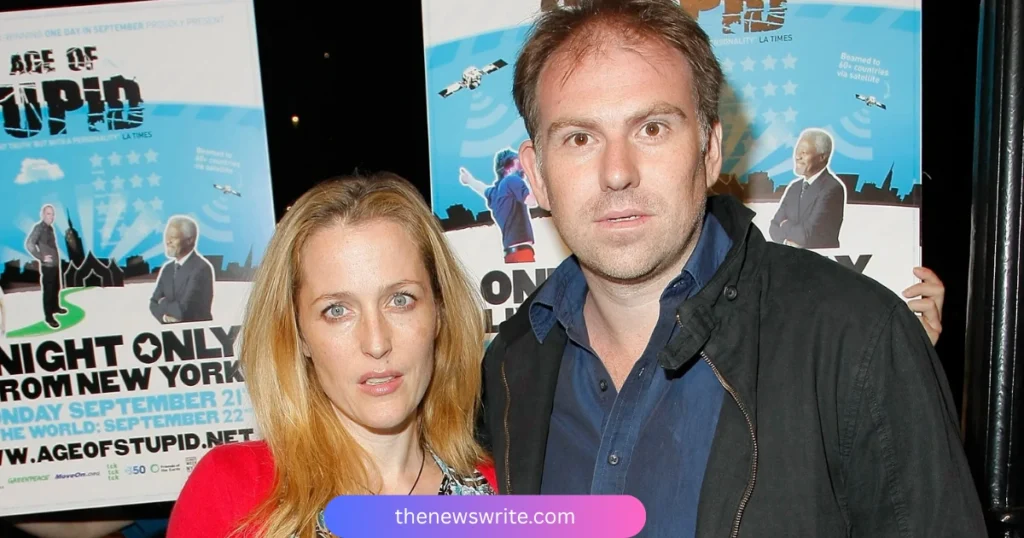
One of the most consistent threads throughout Julian Ozanne’s life is his commitment to privacy. Despite his marriage to a globally recognized actress and his own accomplished career, he has never pursued celebrity status, rarely appears in interviews, and has no confirmed public social media presence. This is somewhat unusual for someone whose name regularly appears in entertainment coverage, but it is entirely consistent with the professional culture he came from — the discretion and editorial restraint typical of serious financial journalism. As a result, much of what is publicly known about him centers on verifiable career milestones rather than personal details, which he has largely kept out of the public record.
Julian Ozanne’s Legacy in Journalism and Beyond
Taken as a whole, Julian Ozanne’s career tells the story of a genuinely versatile professional: a war-zone correspondent who became a documentary filmmaker, then a businessman focused on sustainable investment in Africa. His work at the Financial Times alone would represent a substantial career for most journalists, yet for Julian Ozanne it was only the first of several chapters. His documentaries brought a journalist’s rigor to cultural subjects, and his later business and advisory work brought a storyteller’s insight to finance and development. Few public figures move so fluidly between these worlds, and that adaptability remains the defining feature of his professional legacy.
Conclusion
Julian Ozanne’s life is far richer than the “Gillian Anderson’s ex-husband” label that often accompanies his name in search results. From a childhood shaped by Africa, to a rigorous education at the London School of Economics, to nearly a decade as a Financial Times correspondent covering more than 50 countries, and later chapters in documentary film and African business investment, his career reflects genuine range and depth. His brief, well-publicized marriage to Gillian Anderson remains a notable chapter, but it is just one part of a much longer story defined by journalism, storytelling, and a lasting connection to Africa. Today, writing from London and Cape Town, Julian Ozanne continues to draw on the same instincts that shaped his entire professional life: curiosity, discretion, and a deep respect for the truth.
Frequently Asked Questions (FAQs)
1. Who is Julian Ozanne? Julian Ozanne is a British journalist, former Financial Times correspondent, documentary filmmaker, and businessman, best known professionally for his African and Middle East reporting and personally for his marriage to actress Gillian Anderson.
2. Where was Julian Ozanne born? He was born in Kenya in the mid-1960s and spent much of his early life connected to East and Southern Africa.
3. What did Julian Ozanne do at the Financial Times? He served as a foreign correspondent, including roles as Middle East correspondent and Africa Bureau Chief, reporting from more than 50 countries.
4. Is Julian Ozanne still married to Gillian Anderson? No. They married in December 2004 in Kenya and separated in 2006. They have no children together.
5. What documentaries has Julian Ozanne made? His notable film credits include This Is Not an Exit: The Fictional World of Bret Easton Ellis (1999), Giorgio Armani: A Man for All Seasons (2000), and Here to Where (2002).
6. What does Julian Ozanne do now? He is involved in African forestry and business investment, has advisory ties to institutions like the World Economic Forum, and writes independently through a Substack newsletter, splitting his time between London and Cape Town.
7. Is Julian Ozanne active on social media? No verified public social media accounts have been confirmed, consistent with his generally private approach to public life.