



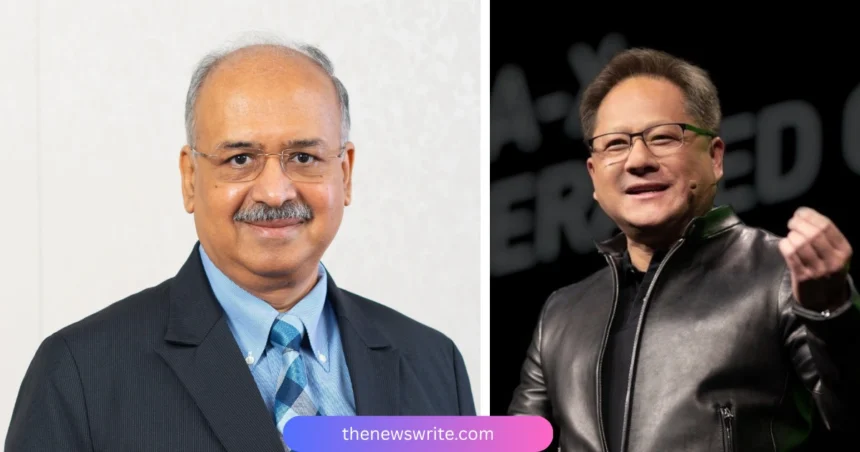
Dilip Shanghvi and Jensen Huang represent two of the most compelling entrepreneurial journeys of the modern business world. One built India’s largest pharmaceutical company from a $200 loan, while the other transformed a niche graphics-chip startup into the engine powering the global artificial intelligence revolution. Though they operate in entirely different industries — pharmaceuticals and semiconductors — both men share a common thread: relentless focus, long-term thinking, and the courage to bet big on their own vision.
This article takes a deep, factual look at the lives, careers, and business philosophies of Dilip Shanghvi, founder of Sun Pharmaceutical Industries, and Jensen Huang, co-founder and CEO of Nvidia. Whether you’re a student of business, an investor, or simply curious about how billionaires are made, this comprehensive biography breaks down everything you need to know about Dilip Shanghvi and Jensen Huang in one place.
Who Is Dilip Shanghvi?
Dilip Shanghvi is an Indian billionaire businessman best known as the founder and managing director of Sun Pharmaceutical Industries, India’s largest and most valuable listed pharmaceutical company. Born on October 1, 1955, in the small town of Amreli, Gujarat, Shanghvi grew up in Kolkata, where his father ran a modest wholesale pharmaceutical distribution business. That early exposure to the drug trade quietly shaped the direction of his entire career, long before anyone could have predicted the scale of what he would eventually build.
Today, Shanghvi is consistently ranked among India’s richest individuals and among the world’s wealthiest self-made entrepreneurs, with estimates placing his net worth well above $25 billion as of 2025-2026, according to Forbes and Bloomberg billionaire trackers.
Who Is Jensen Huang?
Jensen Huang is the co-founder, President, and CEO of Nvidia, the American technology company that has become synonymous with graphics processing units (GPUs) and, more recently, the hardware backbone of the global AI boom. Born Jensen Hsun Huang on February 17, 1963, in Tainan, Taiwan, he emigrated to the United States as a child and was raised partly in Kentucky before his family settled in Oregon.
Huang studied electrical engineering at Oregon State University and later earned a master’s degree from Stanford University. Under his leadership, Nvidia evolved from a gaming-graphics company into the world’s most valuable semiconductor firm, with its market capitalization crossing the historic $5 trillion mark in 2026 — a milestone no publicly traded company had ever reached before.
Early Life and Education of Dilip Shanghvi
Shanghvi’s early years were defined by modest means rather than privilege. Raised in a Jain family in Kolkata, he completed his Bachelor of Commerce (B.Com) degree from the University of Calcutta. Unlike many Indian industrialists of his generation, he did not inherit a sprawling conglomerate. Instead, his father’s small pharmaceutical distribution trade became his classroom, exposing him early to supply chains, drug formulations, and the economics of the healthcare business. This grounded, hands-on education proved far more valuable than any formal MBA, shaping the practical, no-nonsense mindset that would later define Sun Pharma’s growth strategy.
Early Life and Education of Jensen Huang
Jensen Huang’s childhood was markedly different but equally formative. After moving to the United States, young Huang attended boarding school in rural Kentucky before his family relocated to Oregon. He famously worked part-time as a dishwasher and busboy at a Denny’s restaurant — the very same restaurant chain where, years later, he would co-found Nvidia. Huang pursued electrical engineering at Oregon State University, graduating in 1984, and went on to complete his master’s degree at Stanford while working in the semiconductor industry, gaining engineering expertise at companies like AMD and LSI Logic before striking out on his own.
How Dilip Shanghvi Founded Sun Pharmaceutical Industries
In 1983, at the age of 27, Dilip Shanghvi founded Sun Pharmaceutical Industries in Vapi, Gujarat, with just ₹10,000 and two employees, borrowing roughly $200 from his father to get started. He deliberately chose to manufacture psychiatric drugs, a niche and underserved segment that larger pharmaceutical companies had largely ignored at the time. This strategic focus on overlooked, high-barrier therapeutic areas became the defining pattern of his career — enter where competition is thin, build deep expertise, and scale methodically rather than chase every opportunity.
The Birth of Nvidia: Jensen Huang’s Denny’s Booth Moment
Jensen Huang co-founded Nvidia in 1993 alongside engineers Chris Malachowsky and Curtis Priem. According to Silicon Valley legend, the trio sketched out their business plan in a booth at a Denny’s restaurant in San Jose, California. Their original vision was narrow: build specialized graphics chips for the emerging PC gaming market. Nvidia took its first major leap forward with its 1999 initial public offering (IPO), and its GPUs quickly became essential to rendering realistic 3D graphics — a foundation that, decades later, would prove unexpectedly perfect for an entirely different workload: artificial intelligence.
Sun Pharma’s Rise Under Dilip Shanghvi’s Leadership
Under Shanghvi’s steady hand, Sun Pharma grew from a small generics manufacturer into India’s largest pharmaceutical company by market capitalization. The company expanded aggressively into international markets, entering the United States in 1998 through a stake in Caraco Pharmaceutical Laboratories. Shanghvi’s growth strategy relied heavily on strategic acquisitions of distressed or undervalued assets, allowing Sun Pharma to acquire capabilities and market access far faster than organic growth alone could deliver. Today, Sun Pharma generates billions of dollars in annual revenue, with a significant share coming from overseas markets, particularly the United States and other developed economies.
The Ranbaxy Acquisition: Dilip Shanghvi’s Boldest Bet
The single largest deal of Shanghvi’s career came in 2014, when Sun Pharma acquired Ranbaxy Laboratories, a scandal-tainted rival, in a deal worth roughly $4 billion. The acquisition was widely viewed as risky given Ranbaxy’s regulatory troubles at the time, but it ultimately cemented Sun Pharma’s position as India’s undisputed pharmaceutical leader. Shanghvi also fought a prolonged, three-year battle to wrest control of Israel-based Taro Pharmaceutical Industries, demonstrating the same patient, persistent negotiating style that has characterized his entire dealmaking career.
Nvidia’s Pivot: From Gaming Graphics to Artificial Intelligence
The true turning point in Jensen Huang’s career came when Nvidia’s engineers recognized that GPUs — originally designed to render video game graphics — were exceptionally well suited to the parallel processing demands of machine learning and AI. Huang bet the company’s future on this insight, developing the CUDA software platform that allowed developers to harness GPU power for general computing tasks. When the generative AI boom accelerated in the 2020s, Nvidia’s chips became the indispensable infrastructure behind nearly every major AI model, transforming Huang’s company almost overnight into the most important supplier in the global technology industry.
Recent Business Moves: Sun Pharma’s Global Expansion
Shanghvi has kept up his acquisitive pace in recent years. In 2023, Sun Pharma completed a $576 million acquisition of Concert Pharmaceuticals. In May 2025, the company acquired U.S.-based oncology firm Checkpoint Therapeutics for $355 million. Most notably, in April 2026, Sun Pharma agreed to acquire Organon & Co. in an all-cash transaction valuing the New York-listed healthcare company at approximately $11.8 billion — a deal expected to more than double Sun Pharma’s annual revenue and place it among the world’s top 25 drugmakers once completed.
Nvidia’s Record-Breaking Growth Under Jensen Huang
Nvidia’s growth trajectory under Huang has been extraordinary by any historical standard. The company’s stock has surged repeatedly on the back of soaring demand for AI infrastructure, propelling Nvidia past Apple and Microsoft to become the world’s most valuable publicly traded company. In 2026, Nvidia became the first company in history to sustain a $5 trillion market capitalization, driven by continued adoption of its data-center GPU architectures and expanding partnerships with cloud providers worldwide.
Dilip Shanghvi’s Net Worth and Wealth Sources
As of 2025-2026, Dilip Shanghvi’s net worth is estimated at over $25 billion, according to Forbes and Bloomberg. His fortune is built almost entirely on his controlling stake in Sun Pharmaceutical Industries and its research arm, Sun Pharma Advanced Research Company (SPARC), along with promoter-group holdings attributed to him as founder. Unlike many billionaires who diversify broadly, Shanghvi has largely stayed concentrated in the pharmaceutical sector, with a smaller stake in Suzlon Energy, a wind turbine manufacturer, purchased for around $289 million in 2015.
Jensen Huang’s Net Worth and Wealth Sources
Jensen Huang’s net worth has fluctuated in the range of roughly $150 billion to over $200 billion through 2026, depending on Nvidia’s day-to-day stock performance, placing him among the top ten richest people on the planet. Huang owns approximately 3% to 3.5% of Nvidia, held both directly and through family trusts. Because nearly all of his wealth is concentrated in Nvidia equity, his fortune is highly sensitive to swings in the AI-chip market — a concentration risk that mirrors, in a different industry, the same singular-focus philosophy Shanghvi has followed with Sun Pharma.
Leadership Style and Business Philosophy Compared
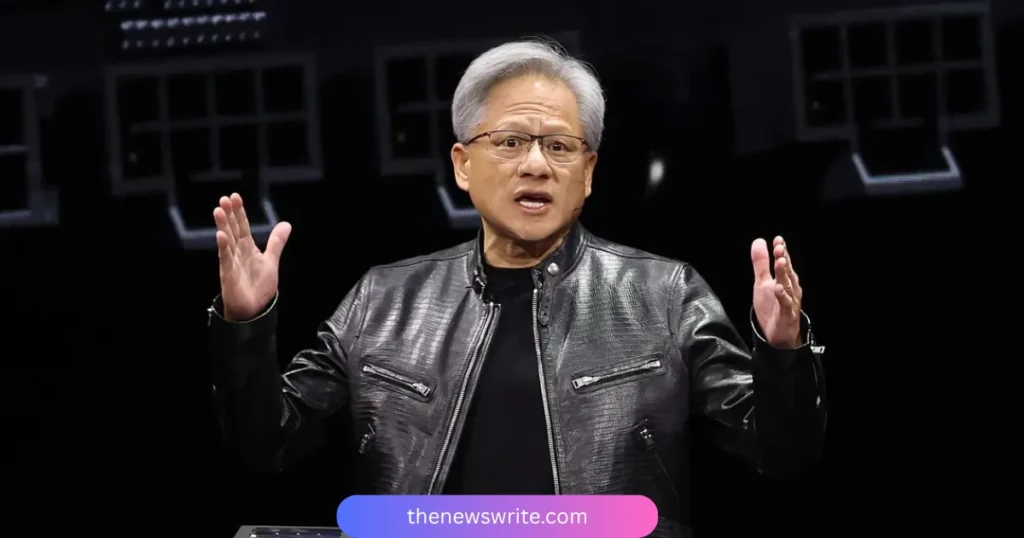
Despite their different sectors, Dilip Shanghvi and Jensen Huang share notable leadership traits. Both are known for staying deeply hands-on with core operations rather than delegating strategic decisions entirely. Shanghvi is famously media-shy and rarely gives interviews, letting Sun Pharma’s results speak for themselves, while Huang has become a highly visible public figure, known for his signature black leather jacket and energetic keynote presentations at industry events like CES. Where Shanghvi’s philosophy centers on disciplined, patient acquisitions, Huang’s centers on aggressive technological reinvention — yet both share an unwavering, decades-long commitment to a single core business.

Awards, Recognition, and Public Standing
Shanghvi’s contributions to Indian industry were formally recognized when he received the Padma Shri, one of India’s highest civilian honors, in 2016. He also chairs the Shantilal Shanghvi Foundation, a philanthropic body named after his father. Jensen Huang, meanwhile, has received numerous technology-industry accolades and is widely regarded as one of the defining CEOs of the AI era, regularly featured on global power and innovation lists published by Time, Forbes, and Fortune.
Family and Succession Plans
Succession planning is already underway at Sun Pharma. In February 2025, Shanghvi’s son, Aalok Shanghvi, was appointed Chief Operating Officer, signaling a gradual generational transition at the company. Jensen Huang, by contrast, has given no public indication of stepping back from Nvidia’s day-to-day leadership and remains firmly at the helm as the company navigates its position at the center of the global AI infrastructure race.
Why Dilip Shanghvi and Jensen Huang Matter to the Global Economy
The stories of Dilip Shanghvi and Jensen Huang matter far beyond their personal fortunes. Sun Pharma’s growth reflects India’s rise as a global pharmaceutical manufacturing hub, supplying affordable generic medicines to patients worldwide. Nvidia’s ascent under Huang reflects a broader technological shift, where computing power itself has become the most valuable commodity on earth. Together, their careers illustrate how founder-led companies, guided by long-term conviction rather than short-term trends, can reshape entire industries.
Conclusion
Dilip Shanghvi and Jensen Huang offer two distinct but equally inspiring blueprints for building a global business empire. Shanghvi turned a $200 loan and a niche focus on psychiatric drugs into Sun Pharmaceutical Industries, India’s pharmaceutical giant, through decades of disciplined acquisitions. Huang turned a Denny’s booth conversation into Nvidia, the company now powering the world’s artificial intelligence infrastructure. Their combined journeys — from humble beginnings to multi-billion-dollar empires — serve as a powerful reminder that sustained focus, patience, and conviction remain the most reliable ingredients for extraordinary business success, regardless of industry or geography.
Frequently Asked Questions (FAQs)
1. What are Dilip Shanghvi and Jensen Huang known for? Dilip Shanghvi is known as the founder of Sun Pharmaceutical Industries, India’s largest pharma company, while Jensen Huang is known as the co-founder and CEO of Nvidia, the leading AI chipmaker.
2. What is Dilip Shanghvi’s net worth in 2026? Dilip Shanghvi’s net worth is estimated at over $25 billion as of 2025-2026, based primarily on his stake in Sun Pharma.
3. What is Jensen Huang’s net worth in 2026? Jensen Huang’s net worth has ranged between roughly $150 billion and $200 billion in 2026, fluctuating with Nvidia’s stock price.
4. How did Dilip Shanghvi start Sun Pharma? He founded Sun Pharma in 1983 with ₹10,000 and two employees, focusing initially on psychiatric drugs, after borrowing $200 from his father.
5. How did Jensen Huang start Nvidia? Huang co-founded Nvidia in 1993 with Chris Malachowsky and Curtis Priem, reportedly planning the company at a Denny’s restaurant in San Jose.
6. What was Sun Pharma’s biggest acquisition? Sun Pharma’s largest acquisition was Ranbaxy Laboratories in 2014, valued at approximately $4 billion, followed by the pending Organon & Co. deal worth $11.8 billion announced in 2026.
7. Why is Nvidia so valuable today? Nvidia’s GPUs and CUDA software platform became the essential hardware and software foundation for artificial intelligence computing, driving its market capitalization past $5 trillion in 2026.